FROM CHAOS TO STRUCTURED PRODUCT DEVELOPMENT
I had the opportunity to work on building a product development system from the ground up, while forming and leading a multidisciplinary team.
The goal was to transform an unstructured workflow into a clear, scalable process capable of supporting business needs, improving development efficiency and enabling better decision-making across teams.
End-to-end development system implemented
Cross-functional alignment established
Team build from scratch
Increased development capacity
Before
– No structured process
– No tracking system
– Communication gaps
– Unclear timelines
After
– Defined development workflow
– Centralized tracking system
– Cross-team alignment
– Predictable timelines
Aproach
The work began with a full assessment of the existing workflow, identifying gaps in structure, communication and capacity.
Based on this, I designed a structured development system that defined clear stages, responsibilities and validation points across the entire product lifecycle.
A key part of the approach was balancing flexibility and control: allowing creative exploration while ensuring that development remained aligned with timelines, technical requirements and production constraints.
My Role
I led the creation of the development team and the structuring of the entire product development process.
This included defining roles and responsibilities, hiring team members, establishing workflows and acting as the main point of coordination between design, production, commercial and communication teams.
I was also responsible for prioritization, decision-making and ensuring alignment between business objectives and development execution.
Development system
Each stage had clear deliverables, responsibilities and checkpoints, reducing uncertainty and improving decision-making throughout the process.
To support this system, I developed centralized tools and documentation, including product databases, technical templates and tracking systems accessible across teams.
A structured process was implemented to guide each product from initial idea to production approval.
Design intake
Spec Sheet
Prototyping
Iterations and design validation
Technical development
Scaling and tooling development
Production test
Final Approval
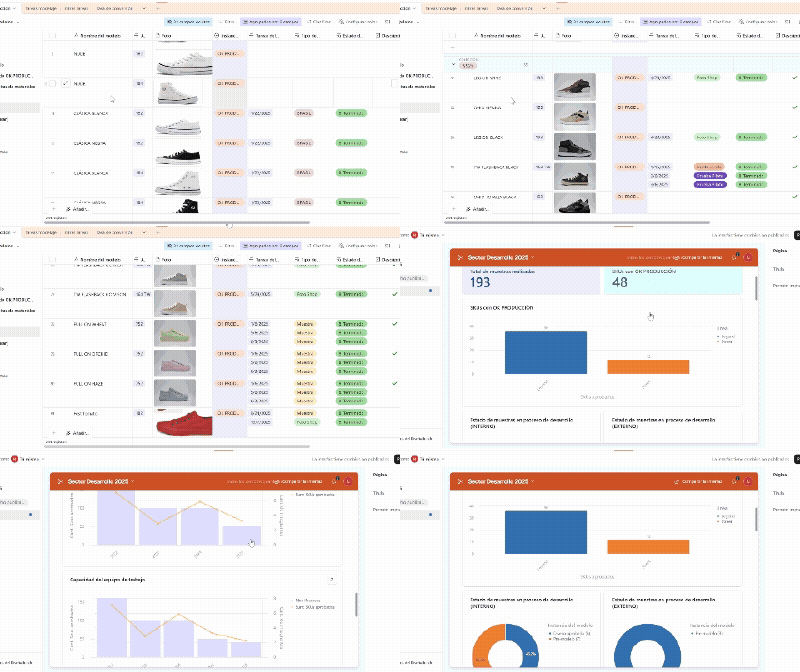
Product Database
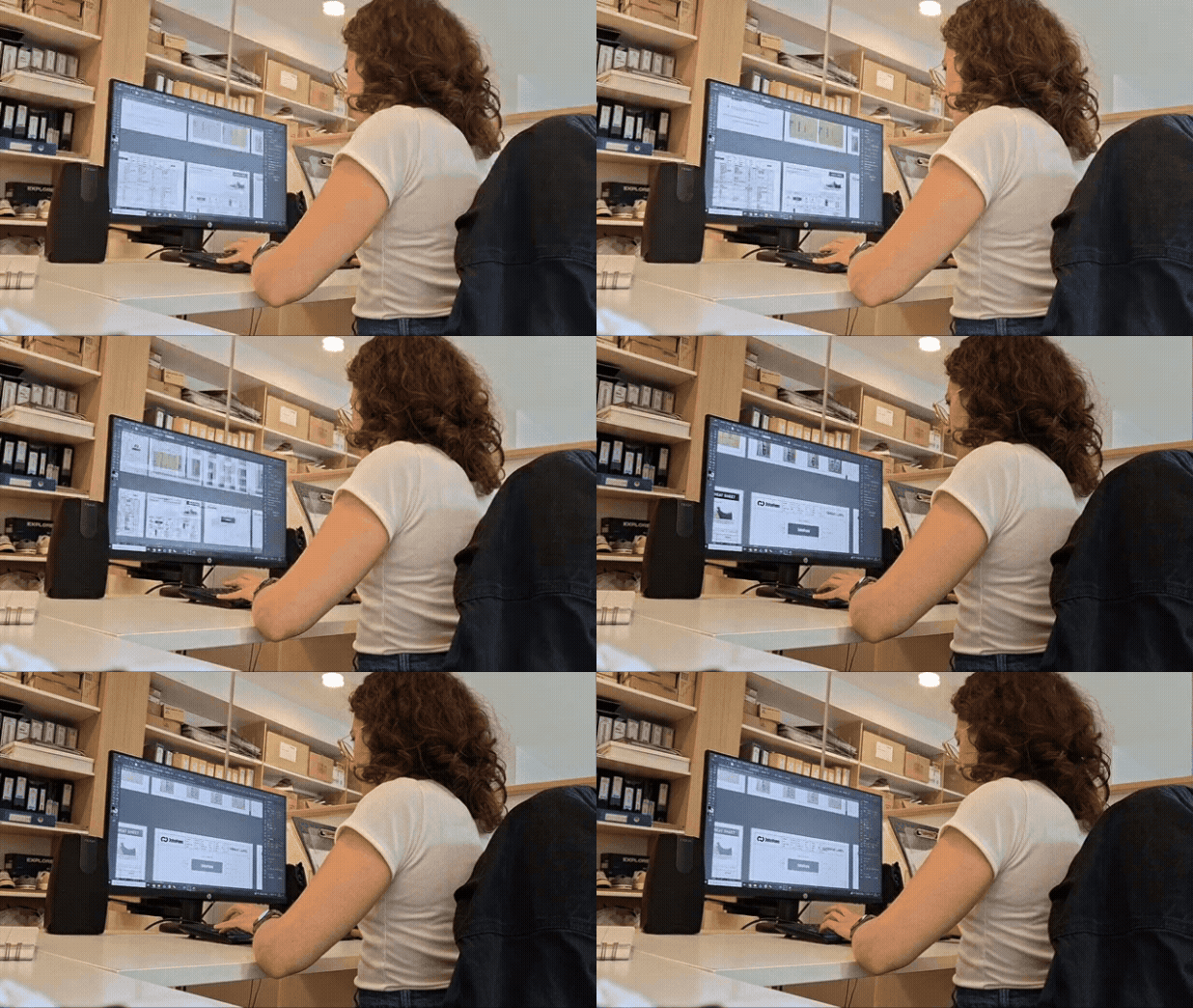
Tech Pack Templates
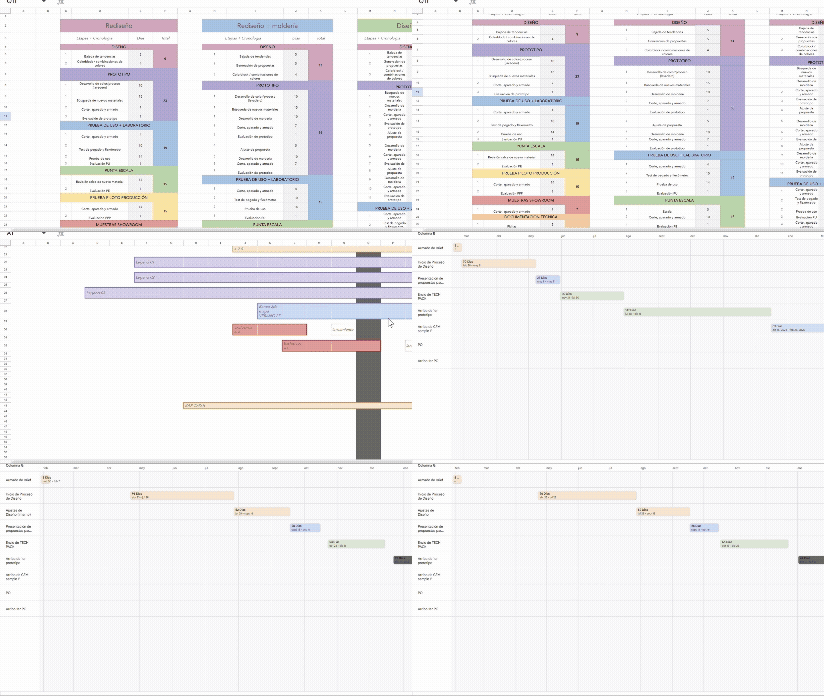
Tracking & Planning System
Results
The implementation of this system significantly improved the performance of the development area and the communication between teams. Decision-making became more structured.
Mapping team capacity allowed me to align development planning with realistic timelines. And eventually the team was able to handle a higher volume of projects with greater clarity, reducing errors, avoiding bottlenecks and improving overall efficiency.
Team & Collaboration
Roles were clearly defined to ensure efficiency and accountability, allowing each team member to focus on specific areas of the development process.
Cross-functional collaboration was established through regular meetings and shared systems, aligning product development with go to market timelines, production requirements and brand communication.
Let’s build products together
From idea to production. Let’s connect
Contact
+54-9-221-5238823
© 2026. All rights reserved.